Fruit Ninja Classic
- 3.3
- Rating
- 10.00M
- Installs
- Free
- Price

 Analysis by App-foxy
I keep coming back to Fruit Ninja Classic for one simple reason: it turns a spare minute into a very clear physical action. Fruit appears, I swipe through it, and the screen responds with the kind of immediate feedback that makes the game easy to understand before I have even settled into a proper session. It is an arcade game from Halfbrick Studios, free to install, and aimed at Everyone, but its appeal is not limited to children. I find it equally useful as a quick hand-eye coordination break, a casual challenge while waiting, or a familiar game to pass around among friends.
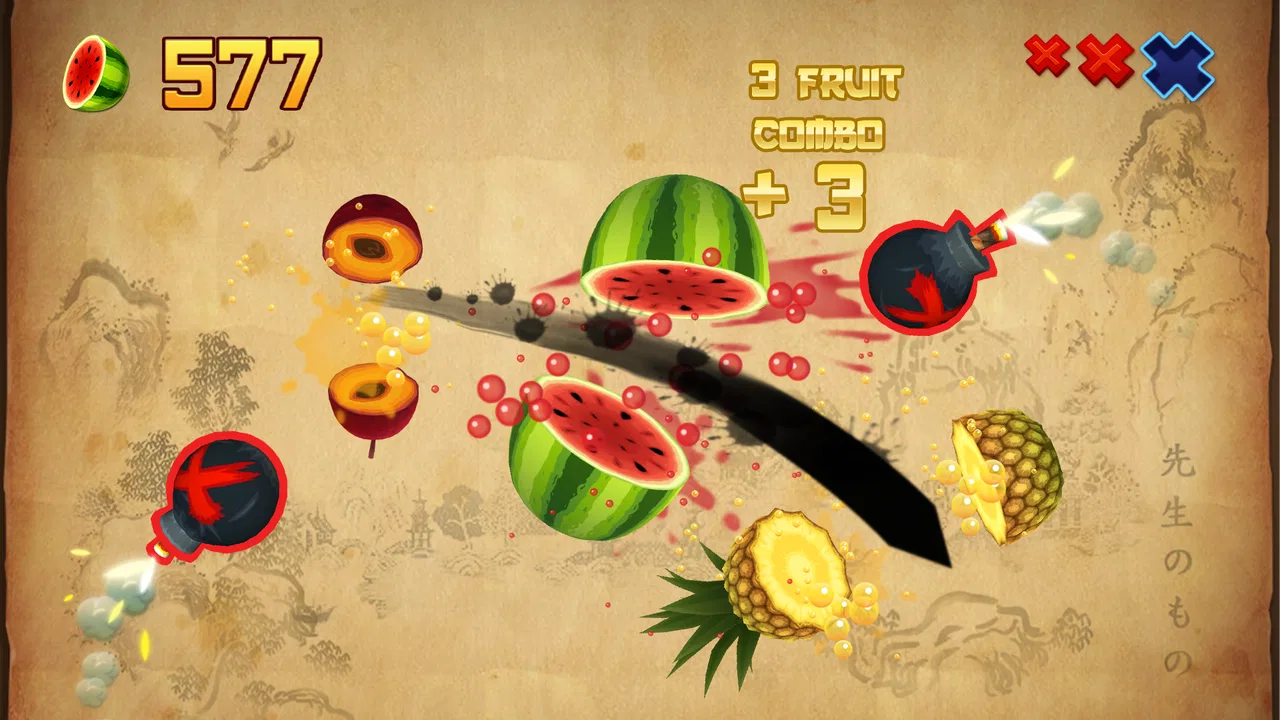
The central capability here is satisfying fruit slicing. That sounds basic, and it is, but the strength of the design comes from how little separates intention from result. I do not need a long tutorial or a complicated control scheme. A swipe is the main conversation between me and the game. That narrow focus gives each round a pleasant rhythm: watch the screen, choose a path, cut quickly, and react to what appears next.
After years of more complicated mobile games, I appreciate that directness. There are no sprawling maps to memorize before playing and no elaborate character build to understand. The game asks for attention in short bursts, which makes it a particularly good fit for people who want an arcade experience rather than a second job on their phone.
You May Also Like

 Blood Strike: 2.5 Anniversary
Blood Strike’s Loadouts Turn Every Drop Into a Tactical Gamble
A close look at Blood Strike’s custom loadouts: how fast access to signature weapons reshapes its battle royale rhythm, rewards preparation, and narrows the gap between fights.

 Pandora - Music & Podcasts
Pandora’s Music Is Easy to Start, but Harder to Recover
Pandora’s strength is its low-effort path from a seed to a station. Its weak spot is how much confidence it asks you to place in connection, setup, and quiet recovery.

 8 Ball Pool
 Is Built on Rivalries, Rematches, and Routine
A close look at the rivalries, rematches, shared routines, and unanswered safety questions that turn a quick pool match into a persistent mobile community.

 Samsung Music
’s Quiet Strength Is Playing What You Already Own
Its reach comes less from spectacle than from dependable access to a personal library. That simplicity is both the app’s strongest retention engine and its ceiling.

 AccuWeather: Weather Radar
AccuWeather Review: A Quick, Clear Forecast for Everyday Decisions
For everyday plans, the best forecast is the one you can understand quickly. AccuWeather makes rain timing, radar, and local conditions easy to act on, with a few trade-offs.

 Hill Climb Racing
Why Hill Climb Racing Still Turns Crashes Into One More Run
A tiny car, a bumpy hill and one more upgrade: Hill Climb Racing keeps resurfacing because its simple chaos makes every near-miss feel personal.
More From Our News Desk



Why the slicing mechanic still works
The important capability is not merely touching fruit. It is the way the game makes a swipe feel like a decision. A short movement can be cautious, while a broader motion can try to catch several pieces at once. That creates a small but meaningful balance between speed and control. I am constantly judging whether a wider cut is worth the risk of moving too quickly or losing accuracy.
This also explains why the game remains approachable. The basic action is understandable immediately, yet repeated play still gives me something to improve. My first attempts are usually about reacting. Later, I start thinking about where my finger is going to travel, whether I am overcommitting to a tempting group, and how much of the screen I can read at once. The learning curve is gentle, but it is not empty.
Fruit Ninja Classic belongs to the arcade category, and that label fits better than a description focused only on casual fun. Arcade games depend on quick recognition, timing, and the desire to try once more. This one follows that tradition closely. A round can feel disposable when I begin, then unexpectedly absorb me because I know I can make a cleaner sequence if I concentrate.
What a swipe changes in the moment
In practice, I treat each swipe as a small piece of planning rather than random movement. If I see several targets near one another, I try to begin outside the group and move through it smoothly. That approach feels more reliable than stabbing at the center of each piece. It also keeps my hand from making unnecessary movements, which matters when the pace rises.
One useful habit is to watch the whole play area instead of staring at the fruit closest to my finger. The next target can change the best route, and tunnel vision makes me react late. I also try not to swipe simply because something is visible. Waiting a fraction longer can produce a cleaner cut than rushing toward an isolated piece.
These are small observations, but they are the reason I do not see the game as a one-joke novelty. The controls are simple enough for a first-time player, while the results still reflect attention. A child can enjoy the colorful action immediately, and an experienced player can become more deliberate about movement without needing a complicated ruleset.
A practical session on an ordinary day
My favorite use case is a short waiting period: before an appointment, during a commute break, or while I am letting a kettle boil. I can open the game, play a few rounds, and stop without feeling that I have abandoned a larger task. That is different from many mobile games that encourage me to return because I have an unfinished construction queue, a daily obligation, or a long chain of rewards to maintain.
It also works well when I want to reset my attention. After reading or working for too long, a brief session gives me a visual and physical change of pace. I am not claiming it improves concentration in a formal sense, but I do notice that its demand is specific: look, decide, swipe. That makes it a more active break than simply scrolling through another feed.
For families, the immediate controls make it easy to explain. Someone can watch one round and understand the basic idea without a lecture. I would still supervise younger players around any game involving purchases, but the age rating is Everyone, and the presentation feels suitable for broad casual play. The main challenge is not understanding the rules; it is deciding when to put the phone down.
How I approach better runs
I get better results when I keep my finger movement economical. Large frantic gestures may look energetic, but they make it harder to follow what is happening. I prefer controlled arcs and try to leave enough of the screen visible to spot the next opportunity. This is especially helpful when several pieces arrive close together and the obvious swipe is not necessarily the safest one.
Another tip is to separate reaction from anticipation. Reaction handles the fruit already in front of me; anticipation means noticing where a future cut might begin. When I combine both, I stop chasing individual targets and start treating the screen as a moving pattern. That shift is the most rewarding improvement I have found, because it makes the game feel less like tapping quickly and more like managing a short sequence of choices.
I also recommend playing with a clean, dry screen and using a comfortable grip. That is not a hidden game feature, but it has a real effect on a swipe-based title. A sticky or crowded display can make a perfectly good decision feel like a missed input. If I am playing on a small phone, I use lighter movements and avoid covering the center of the screen for too long.
Where it fits among arcade alternatives
Compared with endless runners, Fruit Ninja Classic gives me less of a sense of traveling through a world and more of a focused test of hand movement. An endless runner usually asks me to steer a character while watching obstacles approach. Here, the screen itself is the playing field, and my finger becomes the tool. That makes the game easier to pick up for someone who does not enjoy directional controls.
It is also less demanding than a traditional puzzle game in terms of planning ahead. I do not need to study a board or build a long strategy before making a move. On the other hand, players who prefer deep progression, story, or carefully layered systems may find the experience too narrow. Its pleasure comes from execution and repetition, not from discovering a large amount of content.
Against other quick arcade games, its strongest advantage is clarity. I can understand what went well or badly almost immediately. If I miss, I can usually connect that result to a late reaction, a careless swipe, or an overambitious attempt. That makes improvement feel personal rather than mysterious.
The trade-off is that the focused design may lose its shine for someone who wants constant novelty. I can enjoy several short sessions, but I do not expect it to replace a larger game when I want exploration or a long evening of progression. If your priority is a competitive online environment, an elaborate campaign, or a game that changes dramatically from one session to the next, another arcade or action title may suit you better.
The cost of keeping things simple
The game is free, which makes trying it easy, but in-app purchases range from $2.99 to $99.99 per item. That is the point where I become more careful, especially if the phone is shared with a child. The free entry is attractive, yet I would check purchase settings before handing the device over. A simple arcade game should remain a low-pressure pastime, and spending choices can affect that feeling.
I also see the free model as part of the decision about who should play. If you want a completely purchase-free experience with no temptation around optional spending, you may prefer a paid arcade game or a title with a clearer one-time structure. If you are comfortable treating purchases as optional and keeping them controlled, the free download makes it easy to see whether the slicing loop works for you before committing anything.
The average rating is 3.3 from around 114 thousand ratings, with roughly 11 thousand written reviews. I read that as a sign that the game has a recognizable appeal but may not satisfy everyone equally. That matches my experience: the core interaction is polished enough to be enjoyable, while the narrow format and purchase model can be decisive drawbacks for some players.
Device and version considerations
The current version is 3.32.7, and the game requires Android 8.0 or later. That makes the operating-system requirement worth checking before installation, particularly if you are using an older phone that still handles other lightweight games comfortably. The title may look simple, but compatibility is still the first practical question for anyone with an aging device.
It is available on iOS as well as Android, which makes it a convenient recommendation when friends or family use different phones. I would not choose it because of advanced cross-platform features; I choose it because the basic idea translates easily from one touchscreen to another. Someone who has played it on one device can understand the appeal immediately on the other.
The install base is over 10 million, so this is hardly an obscure experiment. That does not automatically make it the best choice, but it does explain why the game feels like a familiar piece of mobile arcade history. It was released on September 15, 2010, and its continued presence makes sense once I focus on the control rather than on modern presentation trends.
Who gets the most from the slicing loop
I would recommend it first to people who want fast, readable sessions. It suits commuters, casual players, families looking for something easy to demonstrate, and anyone who enjoys improving a physical gesture through repetition. It is also a good choice for a person who dislikes tutorials that take longer than the game itself. You can begin with instinct and gradually develop better timing.
It is especially effective when I need a game that can be paused mentally as well as physically. I do not have to remember a complicated objective after a busy day. I can play for a short while, close it, and return later without reconstructing a storyline or a strategic plan. That low memory burden is one of its most useful everyday qualities.
I would skip it if you need a substantial solo adventure, a strong narrative, or a game built around long-term character development. I would also hesitate to recommend it to someone who becomes frustrated by repeated short attempts, because the appeal depends on accepting that repetition. The game gives me a clear action to refine, not a large world to unlock.
Players with limited touchscreen accuracy should try it cautiously. The controls are straightforward, but straightforward does not mean effortless. If your fingers often block the display or your device has an awkwardly small screen, the very mechanic that makes the game appealing can become the main source of irritation.
My recommendation after regular short sessions
What I like most is the honest relationship between input and outcome. When a run feels better, I can usually point to a real change in how I watched the screen or moved my finger. That makes the game satisfying without pretending to be more complex than it is. The best moments come from a smooth, confident cut rather than from a pile of systems surrounding the action.
What limits it is equally clear. The experience is intentionally focused, the free model deserves sensible purchase controls, and people seeking depth will eventually reach the edge of what the format offers. Those are not minor details; they should shape whether you install it. I see it as a snack-sized arcade game, not a replacement for a full gaming hobby.
For me, Fruit Ninja Classic earns a place on a phone when I want immediate action with almost no setup. Halfbrick Studios built its identity around a mechanic that remains easy to explain and surprisingly rewarding to refine. If your ideal mobile game is a quick test of timing that can fill a few spare minutes, I think it is worth trying for free. If you want a deep campaign or a completely frictionless purchase-free experience, choose another option instead.
My practical verdict: install it for the clean swipe-based challenge, keep your sessions short when repetition starts to feel stale, and treat in-app purchases as something to manage rather than a necessary part of the fun. That combination gives the game its best chance to work as intended: a bright, responsive arcade break that asks for your attention, rewards control, and gets out of the way when your spare minute is over.
FAQs for Fruit Ninja Classic
01What is Fruit Ninja Classic?
Fruit Ninja Classic is the original arcade-style fruit-slicing game from Halfbrick Studios. Players swipe across the screen to cut flying fruit while avoiding bombs and trying to achieve the highest possible score. It is designed for quick, entertaining sessions and offers simple controls that are easy to learn, although reaching high scores requires timing, accuracy, and fast reactions.
02Does Fruit Ninja Classic work without an internet connection?
Yes, Fruit Ninja Classic can generally be played offline after it has been installed. The core slicing modes do not require a constant internet connection, which makes the game suitable for travel or situations without mobile data. However, certain features, advertisements, updates, or platform-related services may require occasional online access depending on the version and device.
03Is Fruit Ninja Classic free to download?
Availability and pricing can vary depending on whether you are using Android or iOS, as well as the version listed in your regional app store. Some editions may be paid, while others can be free with advertising or optional purchases. Before downloading, check the store listing carefully for the current price, in-app purchases, advertisements, and supported devices.
04What game modes are included in Fruit Ninja Classic?
Fruit Ninja Classic focuses on fast, straightforward arcade gameplay and commonly includes modes such as Classic, Zen, and Arcade, although the exact selection can depend on the edition. Classic challenges you to survive while avoiding bombs, Zen removes the pressure of bombs and time limits, and Arcade adds a timed challenge with special bonuses and hazards.
05Is Fruit Ninja Classic suitable for children?
Fruit Ninja Classic is generally easy for children to understand because its main mechanic involves swiping over fruit, and it does not require complicated instructions. Nevertheless, parents should review the store rating, advertising policy, and any available in-app purchases before installation. Younger players may also benefit from device purchase restrictions and limited playtime controls.
Pros
- Simple swipe controls make it easy to learn and play.
- Short rounds are ideal for quick gaming sessions.
- Classic arcade gameplay remains satisfying and responsive.
- Works well for players who prefer offline entertainment.
- Bright fruit effects and sounds make slicing feel rewarding.
Cons
- Gameplay can become repetitive after extended sessions.
- Mistakes are costly
- especially when bombs appear unexpectedly.
- Some content may feel dated compared with newer mobile games.
- Limited depth may not satisfy players seeking a long-term challenge.
- Fast action can be difficult on smaller phone screens.

Fruit Ninja Classic
Gallery